-
The red light is an add-on, not a therapy module
-
Sweat volume is not a detox dose
-
Why dry-sauna findings stop at the steam tent door
-
Low-quality detox studies are not a green light
-
What the listing should document and usually doesn't
-
What would change this verdict
-
If the light isn't proven, is the tent worth it?
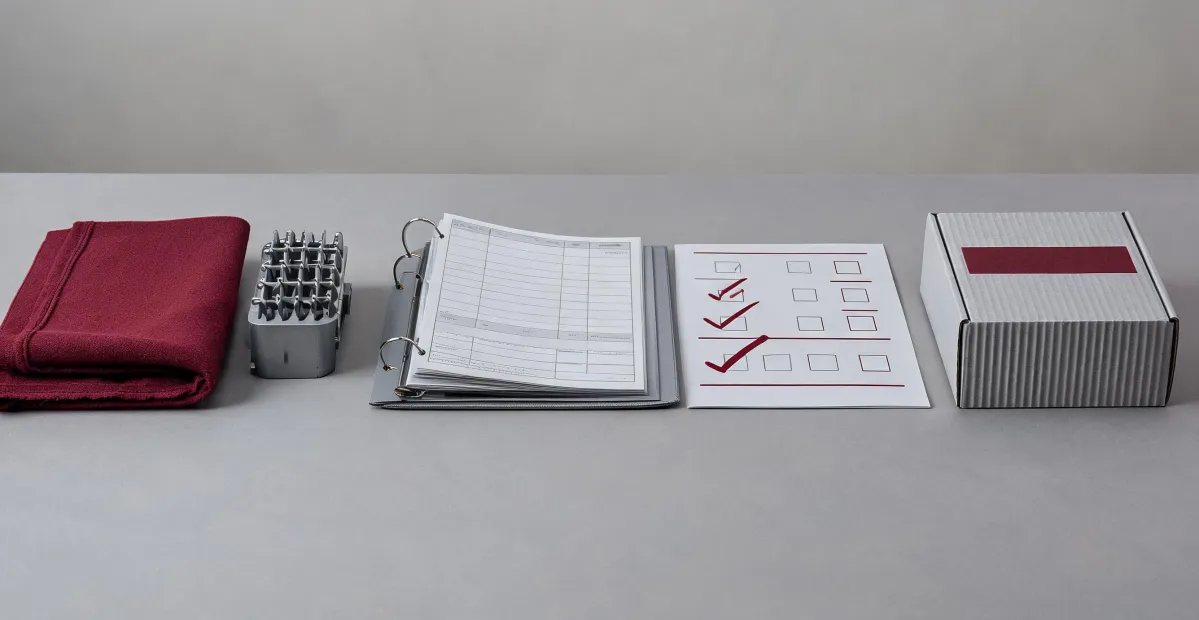
Does the red light bundled with a steam sauna tent detox you? Nothing in the product's own paperwork says it does. The manual for the nurecover Tropic Home Steam Sauna handles the light in two sentences: use the supplied clips to secure it to the top of the sauna frame, then insert four AA batteries (not included) and switch it on. Mount it and power it — that is the full documented scope of the accessory.
Everything a listing implies beyond that — wavelengths, cellular effects, a detox load leaving your body — has to be imported from somewhere else, and the imported material belongs to different equipment, different humidity levels, or studies that the reviewers themselves rated poorly. A shopper comparing tents can settle this in one pass: keep separate what the attachment is from what the page wants it to mean.
The red light is an add-on, not a therapy module
A setup document is unusually honest, because it exists to prevent returns. This one lists clips, battery count and placement. No wavelength figure, no output rating, no session duration, no treated condition. When a maker holds a real optical specification, it goes into the manual and onto the box, because that number sells units.
Read the accessory through a maintenance lens and it shrinks further. Four AA cells are the power source, batteries are not in the box, and the lamp clips to the top of the frame — a part you will handle, refill or replace, and re-clip every time the tent gets folded or knocked over. That is the operating profile of a convenience lamp, not of a therapy module with a service interval and a stated dose.
One caution on range: these are the instructions for the Tropic Home Steam Sauna specifically, and another tent may document its own light differently, so that maker's manual rather than this one would govern that model. The red-light labeling on the unit carries some formatting ambiguity, and no independent spectrum has been published for this model, which makes any spectrum number quoted for it unverified until you find it inside the maker's own document.
Sweat volume is not a detox dose
Most people assume a heavier sweat means more toxins leaving the body. It doesn't follow. A wetter cabin makes you drip; that tells you nothing about what left your body. Sweat is a heat-regulation response, and the rate at which you produce it swings with humidity, airflow and how long you stay in, so volume behaves as a confounded variable rather than a measurement of anything removed. The 2018 dry-sauna review that most of this category's claims lean on excluded studies involving predominantly high-humidity (above 50%) wet or steam sauna — immersion hydrotherapy too — explicitly because differential sweating rates were a potential confounding mechanism; in that literature, sweat volume is noise to be controlled, not an outcome to be reported.
For a buyer, the question worth asking is not how much you sweat but what the page can name. A listing that sells on volume is describing the cabin's moisture, not your body's output.
Why dry-sauna findings stop at the steam tent door
The review's scope statement draws a line at humidity. Studies that were predominantly high humidity, above 50%, wet or steam sauna were excluded, and the focus stayed on dry-sauna interventions. A steam tent sits squarely on the excluded side of that line, which is the plainest reason a dry-sauna number cannot be stapled to a wet box.
The common mistake is mechanical and it shows up on page after page: a headline from a dry-sauna paper gets lifted onto a product photo of a steaming tent, and the reader never sees where the boundary was drawn. The consequence is that you buy on borrowed evidence — the study was real, but it did not describe your cabin. Correct practice is to check the humidity and the equipment named in any study a listing cites before you let it move the price you are willing to pay.
Low-quality detox studies are not a green light
Detoxification programs in people have been studied only a small number of times. Some trials reported positive results on weight and fat loss, insulin resistance and blood pressure, and it is tempting to stop reading there. Most people read a detox label as a tested effect. Actually the institute that reviewed this body of work describes the studies themselves as low quality — design problems, few participants, or no peer review at all.
Two limits matter more than the positive line. A low-quality study base is not a green light for a device it never tested, and none of those programs examined a red-light steam tent or a high-humidity cabin. You are not looking at thin support for this accessory; you are looking at thin support for a family of programs that does not contain it.
What the listing should document and usually doesn't
Before paying a premium, run four checks against the page and the manual for the exact model. How does the light attach — clips, adhesive, a sewn pocket? What battery does it take, and is it in the box? Does a wavelength or output figure appear anywhere for this model, or only for a different product in the same store? And does each study the page cites name the tent, the light, or a high-humidity sauna at all?
Silence on any of those is itself the finding. A page that never states a spectrum is telling you what it has, and the blank belongs in your notes rather than being filled in from a neighboring product. Buyers who paper over that gap end up paying for a specification that was never attached to the thing in the box.
What would change this verdict
Suppose a maker published, for one named model, a spectrum and an output figure, then ran a controlled trial inside a high-humidity steam tent that reported a measured outcome other than sweat volume. That would make a light-specific claim arguable, and even then the claim would be bounded by the model, the humidity and the endpoint chosen.
Imagine the same trial reporting only sweat volume as its result. The argument fails on the endpoint regardless of how good the design is, because humidity still drives that number and the reviewers already treated it as a confounder. What you would need is an outcome the cabin's moisture does not move, measured in the cabin you actually own.
If the light isn't proven, is the tent worth it?
Yes, on its own terms. What you are buying is heat exposure and the routine built around it — a warm, contained session you will genuinely repeat — plus the upkeep a wet fabric box demands: drying it out, re-clipping the lamp, keeping AA cells on hand. None of that needs a detox claim to be worth money, and an unproven light does not sink the tent.
The call is a pricing call. Pay for the heat experience and for details you can verify on the exact model, price the light as what the manual documents it to be — a clip-on, battery-powered accessory — and decline any premium that rests mainly on a detox claim about the light. If a page's argument collapses the moment that claim is removed, the premium was never about the tent.
